
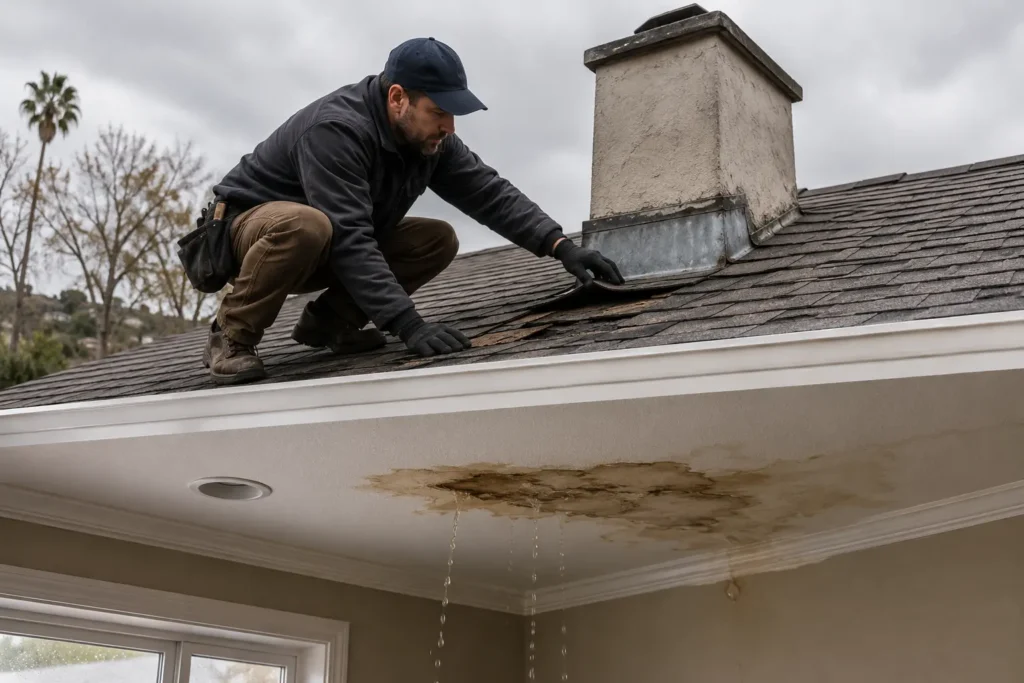
Roof leak repair Los Angeles homeowners need most often comes down to one thing: finding the source before the damage spreads.
A roof leak rarely stays small. What starts as a faint water stain on the ceiling in January can turn into a rotted roof deck, wet insulation, and the early stages of mold by March. Los Angeles does not get rain often, but when it arrives after weeks of dry heat baking the roofing materials, even minor vulnerabilities let water in fast. And because the city goes months without significant rain, leaks often go undetected until real damage has already happened.
This guide covers what causes roof leaks in LA, what the warning signs look like, what repairs realistically cost in 2026, and how to choose someone qualified to fix it properly.
Why Roof Leak Repair in Los Angeles Is Often Too Late
The gap between rain events in LA works against homeowners dealing with roof leak repair Los Angeles. A leak that lets in water during a January storm might not show up as a visible stain until February, by which point the moisture has already been sitting in the insulation or roof deck for weeks.
A few reasons roof leaks in LA are so commonly caught late:
- Long dry periods mean no visual triggers between rain events
- Attic spaces in many LA homes are small or hard to access for regular checks
- Flat and low-slope roofs common across the city drain slowly, giving water more time to find weak points
- Many leaks enter at one point but travel along roof framing before dripping through, making the interior stain appear nowhere near the actual entry point
That last point is important. The wet spot on your ceiling is almost never directly below where water is getting in. This is why accurate leak detection matters more than a quick patch at the obvious spot.
Common Warning Signs of a Roof Leak
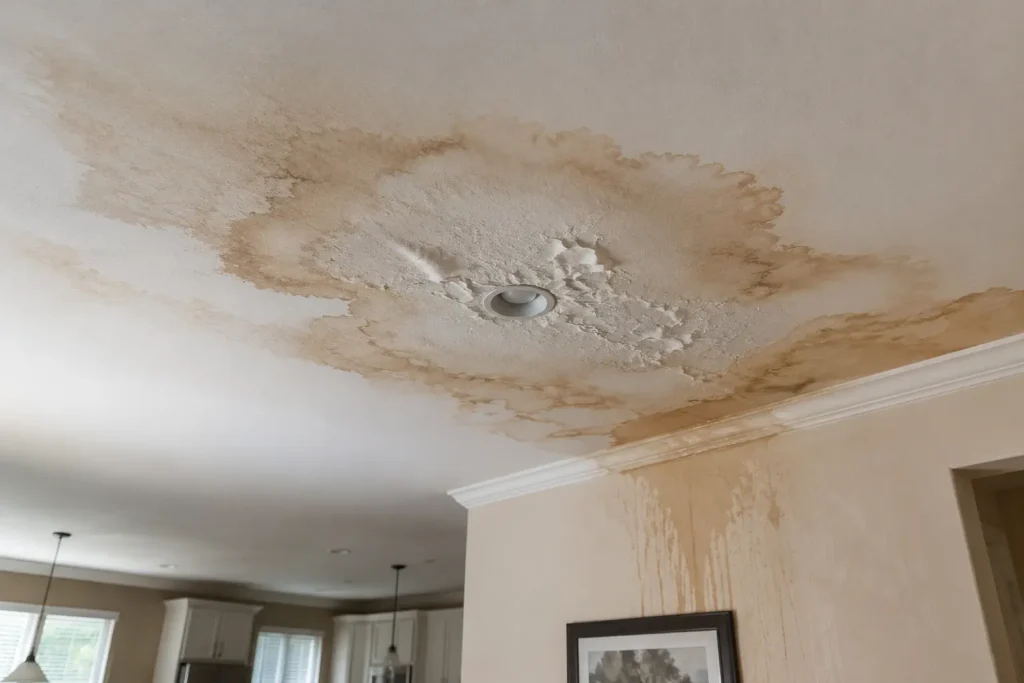
Most leaks give clear signals before they become serious structural problems. The issue is that homeowners often attribute early signs to condensation, humidity, or aging paint rather than a roof problem.
Watch for these inside your home:
- Water stains on ceilings, typically brown or yellow rings that grow after rain
- Paint bubbling or peeling on upper floor walls or ceilings
- A musty smell in upper rooms or the attic that appears after rain
- Damp or wet insulation in the attic
- Daylight visible through the roof decking when viewed from inside the attic
And on the roof itself:
- Lifted, cracked, or missing shingles around valleys or ridgelines
- Cracked or separated flashing around chimneys, skylights, and vents
- Open seams or blistering on flat roof sections
- Granule buildup in gutters, a sign of shingle degradation that leaves the surface vulnerable
- Sagging sections of roofing material, particularly on older flat roofs
- If you are seeing two or more of these, the situation has likely been developing for longer than it appears. A professional roof inspection will give you a documented picture of what is happening and where.
The Most Common Causes of Roof Leaks in LA Homes
Understanding what typically causes leaks in this climate helps you know what to ask about when getting a repair done.
Flashing failures are the most frequent cause across all roof types. The metal strips that seal joints around chimneys, skylights, vents, and wall connections are the weakest point on almost every roof. In LA, thermal cycling and UV exposure break down flashing sealants faster than in cooler climates. A flashing repair done correctly lasts years, and it remains one of the most requested roof leak repair Los Angeles specialists handle every rainy season.
Shingle wear and cracking accounts for a significant share of leak calls on pitched roofs across LA neighborhoods. Asphalt shingles typically last 20 to 25 years, but LA’s UV exposure can accelerate surface degradation on south and west-facing slopes. Once granules are lost and the underlying mat cracks, water gets through. Our shingle replacement service covers both partial repairs and full replacements depending on the extent of wear.
Flat roof membrane failures are the primary leak source on commercial properties and on residential additions with flat or low-slope sections. Open seams, cracked membranes around penetrations, and ponding water that finds its way through degraded material are all common across LA. For flat roof specific issues, our flat roof repair guide covers the failure patterns and what repairs typically involve.
Clogged or damaged gutters contribute more to leaks than most people realize. When gutters back up and overflow, water pools against the fascia and can work its way under the roof edge. Regular gutter maintenance is a genuine leak prevention step, not just an aesthetic one.
Roof Leak Repair Los Angeles – What It Costs in 2026
Roof leak repair Los Angeles pricing runs higher than national averages, partly due to labor costs and partly because many LA properties have older roofing systems. or more complex configurations than newer construction in other markets.
Realistic 2026 ranges for common leak repairs:
- Flashing repair at chimney, skylight, or vent – $400 to $1,200 depending on scope
- Single shingle section repair – $300 to $700
- Flat roof membrane patch or seam repair – $500 to $1,500
- Roof leak detection service – $200 to $500 for a full documented assessment
- Partial re-roof on one slope – $3,000 to $8,000
- Emergency call-out after storm damage – typically adds $150 to $400 to the base repair cost
These are starting points. A quote that comes in well below this range without explanation usually signals either inferior materials or a repair that addresses the symptom rather than the source. Replacing one cracked shingle without checking the surrounding deck and flashing is an example of a repair that will not hold through the next rain season.
For a full breakdown of costs by roof type and size, our roof replacement cost guide covers the numbers in more detail.
How to Choose the Right Roof Leak Specialist in LA
Not every roofer approaches roof leak repair Los Angeles the same way.. Some do a visual check and patch the obvious spot. A proper specialist traces the water path, checks all the likely entry points, and documents what they find.
When evaluating contractors for leak repair:
- Verify their C-39 license at cslb.ca.gov before agreeing to anything. California requires this license for any roofing work over $500 and the check takes under two minutes
- Ask for written documentation of what they found and what they are repairing, not just a verbal rundown
- Be cautious of same-day pressure after a storm. Legitimate contractors give you time to review a written scope before signing
- Check whether they carry general liability and workers’ compensation insurance – ask for the certificates, not just a verbal confirmation
If water is coming in actively, our emergency roof repair team handles urgent situations across Los Angeles with same-day response when available. For leaks that are not immediately active but need proper diagnosis, our leak detection service identifies the exact entry point before any repair work begins.
The Right Time to Act Is Before the Next Rain
Los Angeles rain is unpredictable in timing but consistent in what it reveals. A roof that held up for nine dry months can show its weak points in the first two hours of a significant rain event.
If you have noticed any of the warning signs mentioned here, the window to act before the rainy season is the time when repairs are planned, priced properly, and done without weather pressure. Waiting until water is actively coming through the ceiling typically means higher repair costs, more interior damage to address, and fewer contractor options during a busy storm period.
American Roofing CA handles roof leak repair Los Angeles and surrounding communities. Licensed, insured, and experienced with the specific roof types and permit requirements across LA County.
Call (213) 671-0993 or reach out online for a free Los Angeles roof leak repair assessment.
Leave a Reply